

PRP shoulder treatment is one of the most sought-after regenerative options for upper extremity pain that hasn’t responded to rest, ice, or physical therapy. At Miami Lakes Med Spa in Miami Lakes, FL, we use platelet-rich plasma therapy to help calm stubborn tendon and joint pain in patients across Hialeah, Miami Gardens, Doral, Miramar, and Pembroke Pines.
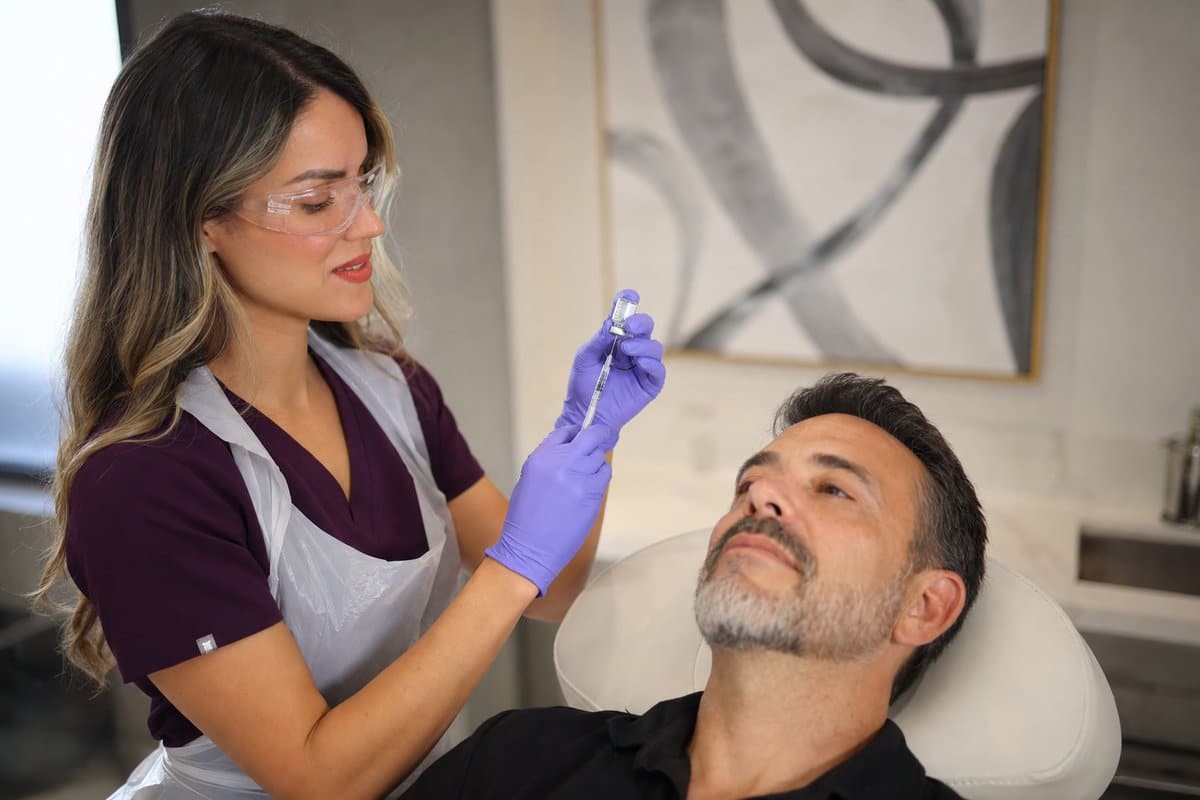
The idea is simple. We draw a small amount of your blood, spin it down to concentrate the healing platelets, and inject that autologous growth factor concentrate right where you hurt. No drugs. No steroids. Just your body’s own repair signals working harder in the exact spot that needs it most.
But not every shoulder, elbow, or wrist problem is a good fit for PRP. Dr. Sabrina Gonzalez, DNP, APRN, and our medical director Dr. John Serpa, MD, help you figure out if you’re a strong candidate before booking a session. Here’s what tends to work best — and what you should realistically expect from the process.
TL;DR
PRP shoulder, elbow, and wrist injections use your own platelets to calm inflammation and support tendon healing. Tennis elbow, rotator cuff tendinopathy, and wrist tendon strains tend to respond best. At Miami Lakes Med Spa, single sessions start at $495.
Key Takeaways
- PRP shoulder injections help mild-to-moderate rotator cuff tendinopathy and biceps tendinitis.
- PRP elbow injections show strong results for tennis elbow and golfer’s elbow.
- PRP wrist injections can ease De Quervain’s tenosynovitis and early thumb arthritis.
- Most patients see gradual improvement over 4 to 12 weeks, with peak results at 3 to 6 months.
- Single PRP session is $495, or save with our 3-session package at $950 at Miami Lakes Med Spa.
PRP Shoulder Injections: Conditions That Respond Best
The shoulder is one of the most-treated joints with PRP because so many shoulder problems involve tendons. And tendons heal slowly on their own. The rotator cuff alone contains four separate tendons, any of which can become irritated, partially torn, or chronically inflamed from repetitive overhead activity, sports, or simple wear and tear over the years.
Conditions that respond well:
- Rotator cuff tendinopathy — chronic wear-and-tear in the tendons that lift your arm
- Partial rotator cuff tears — small tears that aren’t bad enough for surgery
- Biceps tendinitis — pain in the front of the shoulder, often from overuse
- Mild AC joint arthritis — soreness on top of the shoulder
If you’ve had a cortisone shot that wore off, or your physical therapist says your tendon “just won’t calm down,” PRP shoulder treatment is worth a conversation. The growth factors in PRP — including PDGF, TGF-β, and VEGF — signal your body to send in repair cells and build new collagen in the damaged tissue. That’s something a steroid injection simply doesn’t do.
Full-thickness tears and severe arthritis usually need an orthopedic surgeon instead. We’ll always tell you honestly if that’s the case. PRP works best when there’s still viable tendon tissue to repair.
PRP Elbow Injections: Tennis Elbow and Beyond
The elbow is where PRP has some of its strongest research support. If you’ve had nagging elbow pain for months, this is often the best non-surgical step available. Lateral epicondylitis — better known as tennis elbow — affects millions of people, and many of them have never picked up a racket. Repetitive gripping, typing, and lifting are enough to cause it.
Conditions that respond well to PRP elbow treatment:
- Lateral epicondylitis (tennis elbow) — pain on the outside of the elbow from gripping
- Medial epicondylitis (golfer’s elbow) — pain on the inside of the elbow
- Distal biceps tendinopathy — pain at the front of the elbow
- Mild elbow osteoarthritis — stiffness and aching during daily use
Tennis elbow tends to be the star here. Many patients who’ve tried braces, stretches, and steroid shots without lasting relief see real progress after one or two PRP sessions. The key is patience — tendons take weeks to remodel. The research on PRP for lateral epicondylitis consistently shows meaningful improvements in pain and function compared to placebo, particularly when patients give the treatment the full 3-6 month window to work.
Golfer’s elbow responds similarly, though it tends to be less studied. Patients with desk jobs, manual work, or golf-related overuse are good fits. We’ll assess your specific elbow during the consultation to confirm the right approach.
PRP Wrist Injections: Tendons and Small Joints
The wrist has lots of small tendons and joints packed into a tight space. That makes it tricky — but also a good target for precise PRP delivery when the right condition is identified. Many wrist problems are tendon-based, which means they’re exactly the kind of tissue PRP is designed to support.
Conditions that may respond well:
- De Quervain’s tenosynovitis — pain at the base of the thumb from texting, lifting, or new-baby care
- Wrist tendinopathy — overuse pain in the wrist tendons
- Early thumb CMC arthritis — soreness at the base of the thumb
- TFCC irritation — pain on the pinky side of the wrist
De Quervain’s is a particularly common complaint we see in new parents, musicians, and office workers. It can be incredibly persistent. PRP delivered precisely into the tendon sheath can help reduce the inflammation and encourage the tissue to heal properly rather than just staying in a chronic, irritated state.
PRP wrist injections work best for early-stage problems. Severe arthritis, advanced carpal tunnel, or fractures need a hand specialist. We’re happy to refer when PRP isn’t the right tool — getting you the right care matters more than booking a session.
What Makes Someone a Good PRP Upper Extremity Candidate?
PRP upper extremity treatment works best when a few things line up. You don’t need a perfect joint — you just need one that still has healing potential. The goal isn’t to replace a severely damaged structure. It’s to give a stubborn, slow-healing tendon or joint the concentrated biological signal it needs to finally move forward.
Strong candidates often:
- Have had pain for 6 weeks to 2 years that hasn’t fully resolved
- Have tried rest, PT, or NSAIDs without lasting relief
- Want to avoid or delay surgery
- Have realistic goals — better function and less pain, not a brand-new joint
- Are willing to skip anti-inflammatories around the procedure
Not great fits include people with active infections, blood disorders, certain cancers, or pregnancy. We screen for all of this during your free consultation. Regenerative medicine works with your biology — so the healthier your baseline, the better PRP tends to perform.
Age is less of a factor than many people assume. We’ve seen excellent responses in patients in their 50s and 60s, especially when the underlying condition is tendinopathy rather than end-stage arthritis. What matters most is the quality of the tissue and whether a healing response can realistically be triggered.
Realistic Timeline and Results at Miami Lakes Med Spa
PRP is not a fast fix. It’s a slow, biology-based repair process. Setting honest expectations is part of what we do — and it’s also part of why our patients trust us. If you’re looking for instant relief, a cortisone shot might give you that short-term. But if you want something that actually supports healing, PRP is worth the wait.
Typical timeline:
- Days 1-3: Mild soreness or aching at the injection site. This is normal — it means the healing cascade has started.
- Weeks 1-4: Soreness fades. You may notice small improvements in daily tasks.
- Weeks 4-12: Real gains show up. Less pain with activity, better grip, smoother range of motion.
- Months 3-6: Peak results. Many patients keep improving up to 6 months out.
Some patients do best with our 3-session PRP package, spaced 4-6 weeks apart, especially for chronic tendinopathy. Our team will recommend a single session or a series based on your specific condition. Individual results may vary based on age, joint health, and activity level.
We also recommend pairing PRP with physical therapy when possible. PT helps you retrain the joint as it heals, so you get the full benefit of the biological repair happening underneath. Your provider will discuss whether a PT referral makes sense for your case.
Why Choose Miami Lakes Med Spa for PRP Upper Extremity Care?
There are a lot of places offering PRP injections these days. What sets us apart is the combination of clinical oversight, transparent pricing, and honest guidance about what will and won’t work for your specific situation.
Every PRP case at Miami Lakes Med Spa is overseen by Dr. John Serpa, MD, and administered or supervised by Dr. Sabrina Gonzalez, DNP, APRN. We don’t use a one-size-fits-all protocol. Your injection technique, platelet concentration, and aftercare plan are tailored to the joint and condition being treated.
Our flat-rate pricing means no surprises. A single PRP session is $495 and includes your blood draw, centrifuge processing, and the injection itself — there are no hidden lab fees. The 3-session package is $950, which is our most popular option for chronic tendinopathy cases. Financing is available through Cherry, CareCredit, and Klarna if you’d like to spread the cost over time.
We serve patients from Miami Lakes, Hialeah, Miami Gardens, Doral, Miramar, and Pembroke Pines. If you’ve been told to just live with the pain, or if you’ve cycled through steroid shots without lasting results, come in and let’s look at the full picture together.
If you’ve been nursing a sore shoulder, achy tennis elbow, or stiff wrist for months, PRP could be the next step that finally moves the needle. At Miami Lakes Med Spa, Dr. Sabrina Gonzalez, DNP, APRN, and Dr. John Serpa, MD, will walk you through your options honestly — including when PRP isn’t the right call.
We serve patients across Miami Lakes, Hialeah, Miami Gardens, Miramar, Pembroke Pines, and Doral with transparent, flat-rate pricing and a regenerative medicine approach that respects your time and your biology.
Call 305-418-0392 or book your free consultation online. We’re open Tuesday through Saturday, 10 AM to 5 PM, at 7980 NW 155th St, Suite A, Miami Lakes, FL 33016.
Medical disclaimer: This content is for informational purposes only and is not a substitute for professional medical advice. Please consult with a qualified provider to determine if PRP is right for you. Individual results may vary. Last reviewed: 2026.
Frequently Asked Questions
How many PRP sessions will I need for my shoulder or elbow?
Most patients at Miami Lakes Med Spa need 1 to 3 sessions, depending on the condition. Mild tendinopathy may respond to a single PRP shoulder or elbow injection. Chronic or stubborn cases often benefit from our 3-session package, spaced 4-6 weeks apart. Dr. Sabrina Gonzalez will give you a clear recommendation during your free consultation.
Does PRP wrist treatment hurt?
Most patients describe PRP wrist injections as a brief pinch followed by pressure. We use a numbing agent at the injection site to keep you comfortable. You may feel sore for 1-3 days after as your body starts the healing response. Over-the-counter Tylenol is fine, but skip NSAIDs like ibuprofen for about a week.
How soon can I return to work after PRP upper extremity injections?
Most people return to desk work the same or next day. If you do heavy lifting, gripping, or overhead work, plan on 3-7 days of lighter duty. Your provider at Miami Lakes Med Spa will give you specific guidance based on your job and the joint treated. Avoid intense exercise for about a week.
Is PRP covered by insurance for shoulder or elbow pain?
PRP is generally not covered by insurance for orthopedic use, which is why we offer flat-rate pricing — $495 for a single session and $950 for our 3-session package. Financing is available through Cherry, CareCredit, and Klarna, so you can spread the cost out comfortably.
References
- Fitzpatrick J, et al. Analysis of Platelet-Rich Plasma Extraction: Variations in Platelet and Blood Components Between 4 Common Commercial Kits. Orthop J Sports Med. (2017)
- Arirachakaran A, et al. Platelet-rich plasma versus conventional treatments for chronic lateral epicondylitis: a systematic review and meta-analysis. J Orthop Traumatol. (2016)