
PRP knee pain treatment is a regenerative option that uses your own blood platelets to help calm joint inflammation and support healing. At Miami Lakes Med Spa in Miami Lakes, FL, we offer platelet-rich plasma therapy as a non-surgical path for adults with nagging knee pain from arthritis, tendon strain, or early cartilage wear.
If you’ve tried rest, ice, and pills without much luck, you’re not alone. Many of our patients from Miami Lakes, Hialeah, Miami Gardens, Miramar, Pembroke Pines, and Doral come in after months of stiff, achy knees that limit walking, stairs, or workouts. Some have been told surgery is the next step — but they’re not ready for that. PRP gives them another option worth exploring first.
This guide walks you through who’s a good candidate, what the research shows, and a realistic timeline so you know what to expect before booking.
TL;DR
PRP knee pain treatment uses your own platelets to help calm inflammation and support cartilage health in mild to moderate knee osteoarthritis. Most patients feel improvement within 4 to 6 weeks, with peak results around 3 months. At Miami Lakes Med Spa, single sessions start at $495.
Key Takeaways
- PRP knee injections work best for adults with mild to moderate knee osteoarthritis or chronic tendon pain.
- You’ll typically notice improvement 4 to 6 weeks after treatment, with peak results around 3 months.
- A single PRP session at Miami Lakes Med Spa is $495, and a 3-session package is $950.
- PRP uses your own blood, so the risk of allergic reaction is very low.
- Most patients return to light activity within 24 to 48 hours after the injection.
Clinical Summary
- Treatment: Autologous platelet-rich plasma therapy injected into the knee joint or surrounding tendons.
- Best for: Adults 30-70 with mild to moderate knee osteoarthritis, patellar tendinopathy, or early cartilage wear.
- Session length: 45-60 minutes, including blood draw, spinning, and injection.
- Pain level: Mild — numbing cream or local anesthetic is used at the injection site.
- Downtime: 24-48 hours of rest; avoid heavy exercise for 5-7 days.
- Results timeline: Initial relief in 2-4 weeks; peak benefit around 3 months; effects can last 6-12 months.
- Risks: Temporary soreness, swelling, mild bruising; rare infection risk.
- Not for: Active infection, blood disorders, certain cancers, or severe bone-on-bone arthritis.
- Cost: $495 single session or $950 for a 3-session package at Miami Lakes Med Spa.
Who Is a Good Candidate for PRP Knee Pain Treatment?
PRP works best for adults with mild to moderate knee issues — not severe, bone-on-bone damage. The goal is to slow wear and tear and ease pain, not replace a knee that’s beyond repair.
You may be a strong candidate if you have:
- Mild to moderate knee osteoarthritis (Kellgren-Lawrence grades 1-3)
- Chronic patellar tendinitis (jumper’s knee)
- Mild meniscus irritation without a large tear
- Pain that hasn’t responded to physical therapy or NSAIDs
- A desire to avoid or delay knee surgery
Age is also a factor worth mentioning. Most patients who respond well are between 35 and 70 years old. Younger patients with sports injuries or tendon issues can also benefit. Older adults with very advanced joint degeneration may not see the same gains, since there’s less healthy tissue left for the growth factors to work with.
Activity level matters too. Patients who pair PRP with low-impact exercise — like swimming, cycling, or gentle strength training — tend to see better and longer-lasting results than those who stay completely sedentary after treatment.
You may not be a fit if you have an active infection, blood clotting disorders, certain cancers, severe end-stage arthritis, or are pregnant. Dr. Sabrina Gonzalez, DNP, APRN, will go over your imaging and history during your free consultation to help you decide.

How a PRP Knee Injection Works
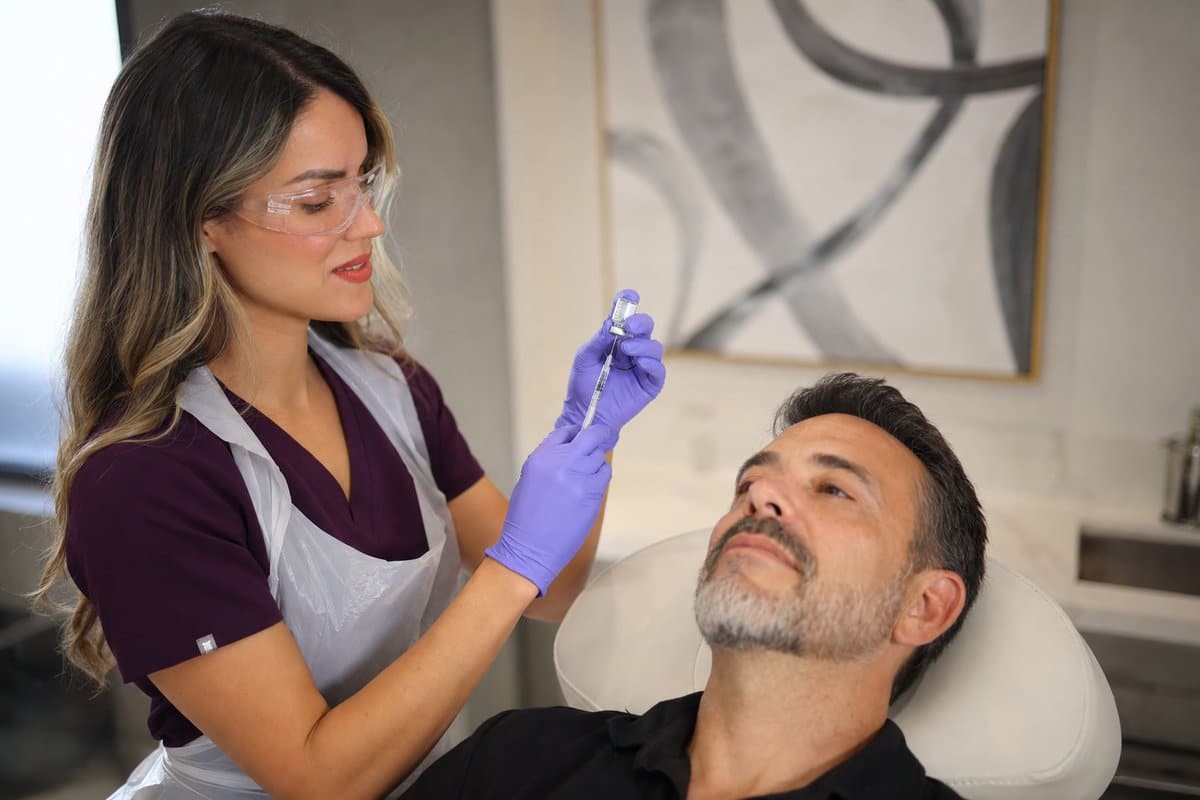
A PRP knee injection is simple in concept. We draw a small amount of your blood — usually around 15-30 mL — and place it in a centrifuge. The machine spins fast and separates the platelets and growth factors from the rest of the blood.
What’s left is an autologous growth factor concentrate. “Autologous” just means it’s from your own body, so allergic reactions are rare.
Your provider then injects this concentrate into the knee joint or the painful tendon. The growth factors signal your body to ramp up repair, calm inflammation, and support healthier tissue. This is why PRP falls under regenerative medicine — it works with your body, not against it.
It’s worth understanding what’s actually in that concentrate. Platelets are tiny blood cells that rush to a wound and release chemical signals called growth factors. These include platelet-derived growth factor (PDGF), transforming growth factor-beta (TGF-β), and vascular endothelial growth factor (VEGF). Together, they help attract repair cells, stimulate collagen production, and reduce inflammatory activity in the joint.
The whole visit takes 45 to 60 minutes. You’re awake the entire time, and we use a numbing agent to keep you comfortable. There’s no general anesthesia, no hospital stay, and no lengthy recovery like you’d face with surgery.
What the Evidence Says About Platelet Rich Plasma Knee Therapy
Research on platelet rich plasma knee treatment has grown a lot over the past decade. Studies published in journals like the American Journal of Sports Medicine and Arthroscopy have compared PRP to hyaluronic acid and saline for knee osteoarthritis.
Here’s what the data tends to show:
- PRP often gives better pain relief and function than hyaluronic acid at 6-12 months for mild to moderate knee OA.
- Many patients see meaningful drops in WOMAC pain scores within 1-3 months.
- PRP appears safer than steroid shots for long-term joint health, since steroids may speed cartilage breakdown over time.
- Results vary based on PRP preparation, platelet count, and how advanced the arthritis is.
More recent research continues to refine our understanding. A 2023 systematic review published in Arthroscopy found that leukocyte-poor PRP formulations — those with fewer white blood cells — may produce less post-injection inflammation compared to leukocyte-rich preparations, particularly for intra-articular knee injections. This has led many providers to be more precise about which PRP formulation they use depending on the patient’s condition.
That said, PRP is not a cure. It works best as part of a broader plan that includes weight management, strength work, and smart activity choices. We’ll be honest with you about what’s realistic for your specific knee. If we don’t think PRP is your best option, we’ll tell you — and we’ll help you find a path that is.
What to Expect: Timeline and Recovery
One of the most common questions we hear is, “When will I feel better?” Healing with PRP is gradual because your body is doing the work.
Days 1-3: Expect mild soreness, swelling, or a feeling of fullness in the knee. This is normal and means the platelets are activating. Use ice and rest. Avoid NSAIDs — they can blunt the healing response.
Week 1-2: Soreness fades. You can return to walking and light daily activity. Hold off on heavy squats, running, or contact sports.
Week 4-6: Most patients start to notice less pain, better range of motion, and easier stairs.
Month 3: This is usually when you’ll feel peak benefit. Many patients report 50-80% improvement in pain.
Months 6-12: Effects can last this long or beyond. Some patients return for a maintenance session once a year. A 3-session package often gives the strongest, most lasting results.
It’s also worth noting that everyone heals at a slightly different pace. Factors like your age, the severity of your arthritis, your activity level, and whether you follow post-care instructions all play a role. Patients who hydrate well, avoid anti-inflammatory medications in the first two weeks, and stay gently active tend to report better outcomes than those who don’t. We’ll give you a written aftercare plan at your visit so there’s no guesswork.
PRP vs. Other Knee Pain Treatments: How It Compares
Understanding where PRP fits in the treatment landscape helps you make a smarter decision. Here’s a quick look at how it stacks up against common alternatives.
Cortisone injections work fast — often within days — and are great for short-term flare control. But repeated cortisone shots can accelerate cartilage breakdown over time, which is the opposite of what you want for a joint you’re trying to preserve. PRP takes longer to work but supports the tissue rather than degrading it.
Hyaluronic acid (viscosupplementation) is another injectable option that lubricates the joint. Multiple studies now suggest PRP outperforms hyaluronic acid for pain relief at the 6-12 month mark, particularly in patients with mild to moderate OA.
Physical therapy is an excellent complement to PRP — not a replacement. Strengthening the muscles around the knee reduces load on the joint and helps your results last longer. We often recommend continuing or starting PT alongside your PRP treatment plan.
Knee replacement surgery is appropriate for severe, end-stage arthritis where conservative options have failed. PRP is not a substitute for surgery when someone truly needs it. But for patients in the mild-to-moderate range, PRP can delay or even prevent the need for surgery — which is a meaningful outcome for most people.
Why Patients Choose Miami Lakes Med Spa for PRP
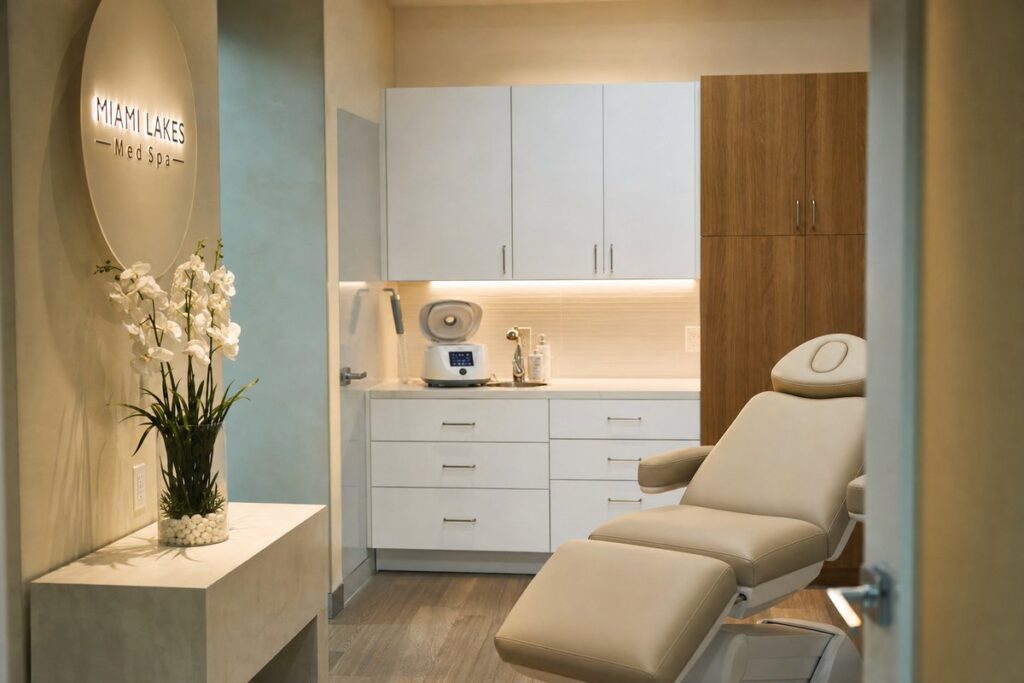
Choosing the right provider matters as much as the treatment itself. At Miami Lakes Med Spa, your PRP is prepared and injected by Dr. Sabrina Gonzalez, DNP, APRN, under the medical oversight of Dr. John Serpa, MD.
Here’s what sets us apart:
- Transparent pricing: $495 for a single session or $950 for a 3-session package. No surprise fees.
- Bilingual care: Our team speaks English and Spanish, which matters across Miami Lakes, Hialeah, and Doral.
- Track record: 2,000+ patients served and a 4.9-star Google rating.
- Honest guidance: If PRP isn’t right for your knee, we’ll tell you.
- Free consultation: No cost to come in and ask questions.
We also take time to explain the process clearly so you know exactly what’s happening and why. Patients tell us that feeling informed and respected makes a real difference — especially when dealing with pain that’s been affecting their quality of life for months or years.
Financing through Cherry, CareCredit, or Klarna makes it easy to break the cost into monthly payments.
If knee pain is slowing you down, a PRP knee injection at Miami Lakes Med Spa may be a smart next step before considering surgery. Our team in Miami Lakes, FL — proudly serving Hialeah, Miami Gardens, Miramar, Pembroke Pines, and Doral — is here to help you understand your options and make the choice that’s right for your body and your goals.
PRP isn’t magic, and we won’t tell you it is. But for the right candidate, it’s a well-researched, low-risk, non-surgical option that can meaningfully reduce pain and improve function — without downtime, without general anesthesia, and without the risks that come with joint replacement. Many of our patients wish they’d tried it sooner.
Call 305-418-0392 to book your free consultation, or visit our booking page to reserve a time. Dr. Sabrina Gonzalez and Dr. John Serpa, MD will review your case and create a plan that fits your goals and budget.
Medical disclaimer: This content is for informational purposes only and is not a substitute for professional medical advice. Individual results may vary. Always consult with a qualified provider about your specific health needs. Last reviewed: 2026.
Frequently Asked Questions
How many PRP knee injections will I need?
Most patients do best with a series of 3 injections spaced 4-6 weeks apart. Some with milder issues see good results from a single session. At your free consultation, Dr. Sabrina Gonzalez will review your imaging and goals to recommend the right plan. Our 3-session package is $950.
Does the PRP knee injection hurt?
You’ll feel a small pinch from the blood draw and the injection. We use numbing cream or local anesthetic at the knee, so the actual shot is mild. Some pressure and soreness can last 1-3 days afterward. Most patients say it’s much easier than they expected.
When can I go back to exercise after PRP?
Light walking is fine within 24-48 hours. Hold off on running, heavy lifting, and high-impact sports for 1-2 weeks. Most patients return to full workouts by week 3-4. Your provider at Miami Lakes Med Spa will give you a custom timeline based on your activity level.
Is PRP covered by insurance?
Most insurance plans don’t cover PRP for knee pain since it’s still considered elective. That’s why we keep pricing simple: $495 per session or $950 for three. We also offer financing through Cherry, CareCredit, and Klarna to help spread out the cost.
References
- Belk JW, et al. Platelet-Rich Plasma Versus Hyaluronic Acid for Knee Osteoarthritis: A Systematic Review and Meta-analysis of Randomized Controlled Trials. American Journal of Sports Medicine. (2021)
- Hohmann E, et al. Leukocyte-Poor Versus Leukocyte-Rich Platelet-Rich Plasma for the Treatment of Knee Osteoarthritis: A Systematic Review and Meta-analysis. American Journal of Sports Medicine. (2023)