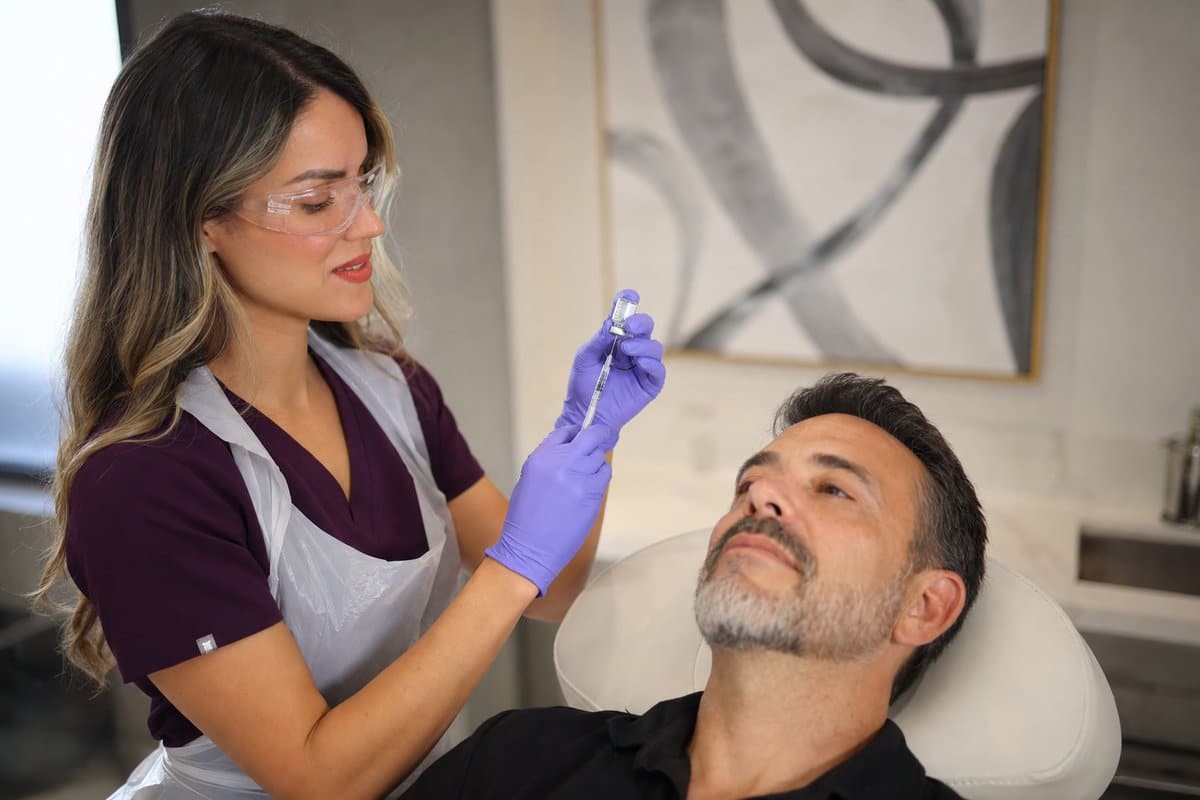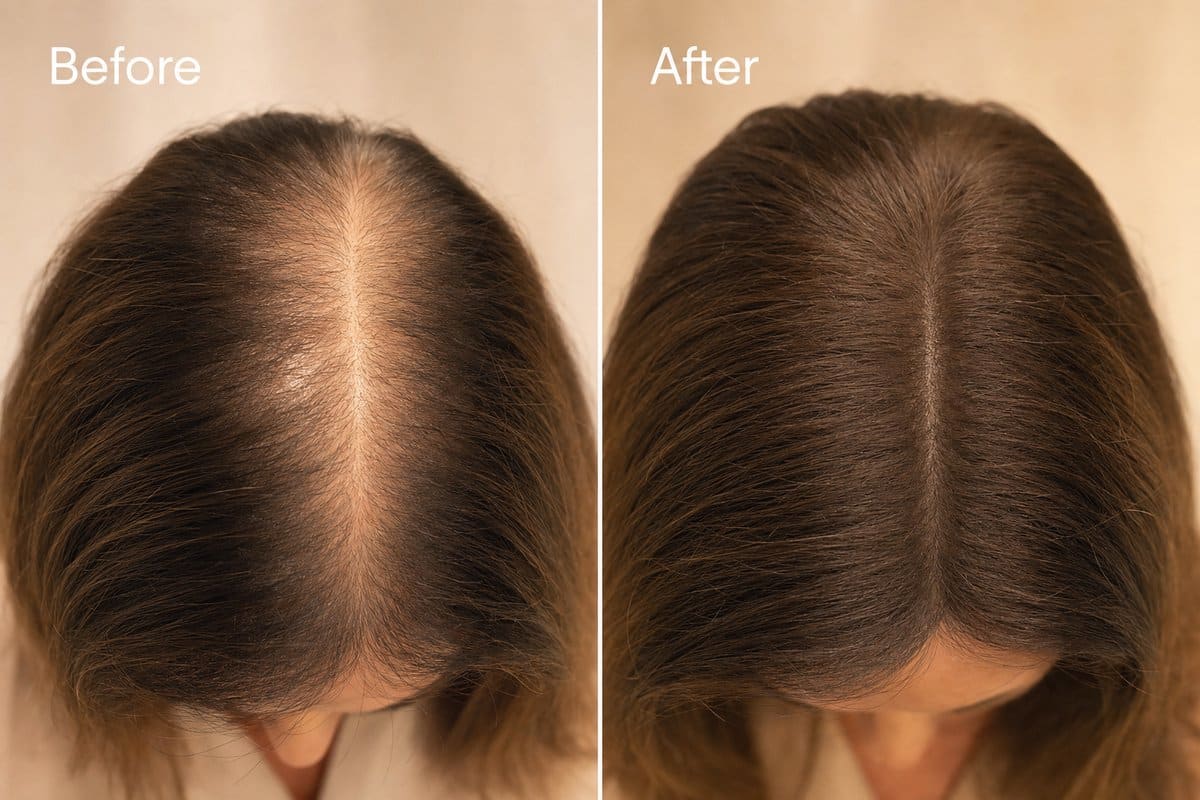


Filler migration is one of the most talked-about concerns in aesthetic medicine right now, and at Miami Lakes Med Spa, we hear about it almost every week. You’ve probably seen the social media posts: a puffy upper lip, a shelf above the lip line, or a cheek that looks oddly shaped months after treatment. That’s filler moving, and it’s a real concern worth understanding.
The good news? Filler migration is almost always preventable. With the right provider, the right product, and a conservative approach, hyaluronic acid filler should stay exactly where it’s placed. Our lead injector, Dr. Sabrina Gonzalez, DNP, APRN, and Medical Director Dr. John Serpa, MD, follow strict safety protocols on every patient from Miami Lakes, Hialeah, Miami Gardens, and Pembroke Pines.
This guide walks you through what filler migration really is, why it happens, how to spot it, and what we can do if it ever shows up in your face.
TL;DR
Filler migration happens when hyaluronic acid filler moves from where it was placed. It’s most common with lip filler and is almost always caused by poor injection technique or too much product. At Miami Lakes Med Spa, Dr. Sabrina Gonzalez, DNP, APRN uses careful placement and FDA-approved fillers like Juvederm and Restylane to keep results in place.
Key Takeaways
- Filler migration is when hyaluronic acid filler shifts from the original injection site, most often seen in the lips.
- The top causes are over-filling, poor injection technique, and using the wrong product for the area.
- Migrated filler can be safely dissolved with hyaluronidase by a qualified provider.
- Choosing a licensed medical injector is the single best way to prevent filler migration.
- Miami Lakes Med Spa offers free consultations to assess any concerns about filler moving or swelling.
Clinical Summary
- What it is: Filler migration occurs when injected dermal filler moves outside the intended treatment area, creating lumps, puffiness, or a shelf-like ridge.
- Most common site: Lip filler migration above the vermilion border, causing a ‘mustache’ or shelf appearance.
- Top risk factors: Over-injection, superficial placement, repeated treatments without dissolving old product, and unlicensed injectors.
- Warning signs: Unexplained swelling weeks after treatment, lumps far from injection sites, distortion of the lip border, or hard nodules.
- Prevention at Miami Lakes Med Spa: Conservative dosing, anatomic landmark mapping, FDA-approved Juvederm and Restylane products, and licensed medical providers only.
- Treatment: Hyaluronidase injections dissolve migrated hyaluronic acid filler within 24-48 hours.
- Downtime after dissolving: 1-3 days of mild swelling or bruising.
- When to seek help: New lumps, vision changes, skin color changes, or severe pain — call us at 305-418-0392 right away.
- Contraindications for filler: Active skin infection, pregnancy, breastfeeding, autoimmune flare, or known allergy to hyaluronic acid filler.
- Cost at our clinic: Lip filler $495 (half syringe) or $695 (full syringe); most facial areas $695 per syringe.
What Is Filler Migration?
Filler migration is when dermal filler moves from where the injector originally placed it. Instead of staying in the lips, cheek, or jawline, the product spreads to nearby tissue. Over time, this can change the shape of your face in ways you didn’t ask for.
This is most common with hyaluronic acid filler products like Juvederm Ultra, Juvederm Voluma, Restylane, and the RHA Collection. These are soft tissue fillers approved by the FDA for facial use. When placed correctly, they hold their shape for 6 to 18 months.
It’s important to know that small amounts of normal spread happen with every injection. True migration is different. It’s a visible shift that changes how your face looks and often shows up weeks or months after the treatment.
Why Lip Filler Migration Happens Most
Lip filler migration gets the most attention online, and there’s a reason for that. The lip area is thin, mobile, and surrounded by muscle. When you talk, eat, or smile, that muscle activity puts pressure on the product.
The main causes of lip filler migration include:
- Over-filling: Too much product in one area has nowhere to go but out.
- Wrong product choice: Some fillers are too thick or too thin for the lips.
- Superficial placement: Injecting too close to the skin’s surface lets product migrate up above the lip border.
- Stacking treatments: Adding new filler on top of old, un-dissolved product over many years.
- Untrained injectors: Non-medical providers without anatomy training are a huge risk factor.
At Miami Lakes Med Spa, we use anatomic mapping before every lip treatment. Dr. Sabrina Gonzalez plans the placement based on your lip shape, muscle pattern, and goals.
Warning Signs Your Filler Is Moving
Catching filler migration early makes treatment simple. Here’s what to watch for:
- A puffy ridge or shelf above the upper lip (the classic ‘mustache’ look)
- Lumps or bumps that you can feel under the skin but didn’t notice right after treatment
- Loss of a clear lip border (your cupid’s bow looks blurred)
- Swelling in an area that wasn’t treated
- Asymmetry that gets worse over time, not better
- Hard nodules months after treatment
If you notice any of these, book a free consultation. We can examine the area, review your past treatments, and recommend the right next step.
How We Prevent Filler Migration at Miami Lakes Med Spa
Prevention starts before the needle ever touches your skin. Our safety standards are built around proven techniques.
Licensed medical injectors only. Every treatment is performed by a licensed medical provider under the oversight of Dr. John Serpa, MD. We never let non-medical staff perform injections.
FDA-approved products. We use Juvederm, Restylane, and other trusted hyaluronic acid filler brands. These are backed by years of clinical data on safety.
Conservative dosing. It’s better to start with less and add more later than to overfill in one visit. We often recommend a half syringe for first-time lip patients.
Anatomic landmark mapping. Dr. Sabrina marks each entry point based on your unique facial structure. This is part of our full-face approach to dermal augmentation.
Honest aftercare guidance. We tell you exactly what to do and what to avoid in the first 48 hours.
Aftercare to Keep Your Filler in Place
What you do after treatment matters as much as the technique. Follow these rules for the first 48 hours:
- No heavy exercise or saunas — heat increases swelling and can shift product.
- No facials, massages, or microcurrent devices for 2 weeks.
- Sleep on your back the first night to keep pressure off the area.
- Skip alcohol for 24 hours to reduce bruising.
- Don’t press, pinch, or ‘shape’ the filler with your fingers.
- Drink water and eat anti-inflammatory foods like pineapple and leafy greens.
For lip filler, avoid using a straw for the first day. The suction motion uses the same muscles that can press filler upward.
What to Do If Your Filler Has Already Migrated
If your filler is moving, don’t panic. Hyaluronic acid filler is reversible. A medication called hyaluronidase dissolves the product in 24 to 48 hours.
At Miami Lakes Med Spa, our process for treating filler migration is straightforward:
- Free consultation: Dr. Sabrina examines the area and reviews your treatment history.
- Dissolve plan: We map out exactly where the migrated product sits.
- Hyaluronidase injection: A quick, in-office treatment that breaks down the filler.
- Rest period: We wait 2-4 weeks before any new filler is placed.
- Fresh start: If you still want volume, we re-treat with proper technique and product.
This same process works for patients across Miami Lakes, Hialeah, Doral, and Miramar. Many of our patients come to us specifically to fix work done somewhere else.
Rare but Serious Complications
Beyond migration, all dermal filler treatments carry small risks. According to FDA guidance and the American Society for Dermatologic Surgery, serious complications are rare but include:
- Vascular occlusion: Filler accidentally enters a blood vessel, blocking blood flow. Signs include sudden pain, skin color change, or blanching.
- Infection: Redness, warmth, or pus at the injection site.
- Granulomas: Small nodules of inflamed tissue that form months later.
- Vision changes: Extremely rare but a medical emergency.
If you ever experience sudden pain, vision changes, or skin that turns white or dark after filler, call us at 305-418-0392 or go to the ER right away. Time matters with vascular issues.
Filler migration is real, but it doesn’t have to happen to you. The right provider, the right product, and conservative technique keep results looking natural and stable. At Miami Lakes Med Spa, our team led by Dr. Sabrina Gonzalez, DNP, APRN and Medical Director Dr. John Serpa, MD has performed over 10,000 treatments with a focus on safety first.
Whether you’re new to filler or worried about past work, we’re here to help. We serve patients from Miami Lakes, Hialeah, Miami Gardens, Miramar, Pembroke Pines, and Doral. Book your free consultation by calling 305-418-0392 or visiting our booking page.
This content is for informational purposes and is not a substitute for professional medical advice. Individual results may vary. Always consult with a qualified provider before any aesthetic treatment. Last reviewed: 2026.
Frequently Asked Questions
How do I know if my lip filler has migrated?
Lip filler migration usually shows up as a puffy ridge above your upper lip, a blurred lip border, or lumps you can feel when you press your lips together. It often appears weeks or months after treatment, not right away. If you’re unsure, book a free exam with Dr. Sabrina at Miami Lakes Med Spa.
Can migrated filler be fixed without surgery?
Yes. If your filler is hyaluronic acid based — like Juvederm or Restylane — a quick injection of hyaluronidase dissolves the product in 24 to 48 hours. No surgery needed. At Miami Lakes Med Spa, this is an in-office treatment that takes about 15 minutes.
How long should I wait before getting new filler after dissolving?
We recommend waiting 2 to 4 weeks after hyaluronidase before placing new filler. This gives your tissue time to settle and lets us assess your natural baseline. Dr. Sabrina will plan a fresh treatment with proper technique to avoid migration the second time around.
Does filler migration happen with all dermal fillers?
Migration is most often linked to over-filling and poor technique rather than the product itself. All hyaluronic acid fillers — Juvederm, Restylane, and the RHA Collection — can move if placed incorrectly. Choosing a licensed medical injector at Miami Lakes Med Spa is the best prevention.
References